Author: tori quadro

  • Harmony & Brotherhood: How A Cappella Shaped One Student’s Musical Journey

    Harmony & Brotherhood: How A Cappella Shaped One Student’s Musical Journey

    When you think about discovering new music, an all-male a cappella group at a state university might not be the first thing that comes to mind. But for Austin Ota, a fourth-year journalism student at the University of Oregon and a member of On The Rocks, a cappella isn’t just about tight harmonies, it’s about connection, exploration, and learning how to really listen.

    In a conversation that spanned everything from Lady Gaga to Hozier, Austin shared how his time in a cappella has broadened his musical perspective, strengthened friendships, and even influenced his taste in artists he might not have found otherwise.

    Meet Austin Ota!

    Austin is a senior journalism major at the University of Oregon with a minor in sports business. A lifelong performer, he’s been involved in music and theater for years, and after a brief hiatus early in college, he returned to the world of a cappella with a renewed sense of purpose and passion.

    Finding His Voice (Again)

    “I’ve been performing my whole life,” Austin said. “I started in musical theater, then choir in high school.” A persistent nudge from his former vocal coach led him to audition for UO’s gender-inclusive group Mind the Gap, but after one term, he took a break to focus on his career. “At the start of junior year, I decided to re-audition, this time for On The Rocks,” he said.

    Now, Austin sings tenor in the group. While he doesn’t hold a leadership role, he plays an important part in shaping each performance, especially during their high-energy Friday night shows.

    Highlights, Harmonies, and Hidden Gems

    When asked about a standout moment, Austin lit up talking about their performance of Bad Romance by Lady Gaga. “It was really special. That song kind of defined the group in my first year, and we were the first to bring it back after years, it has like 14 million views on YouTube,” he explained.
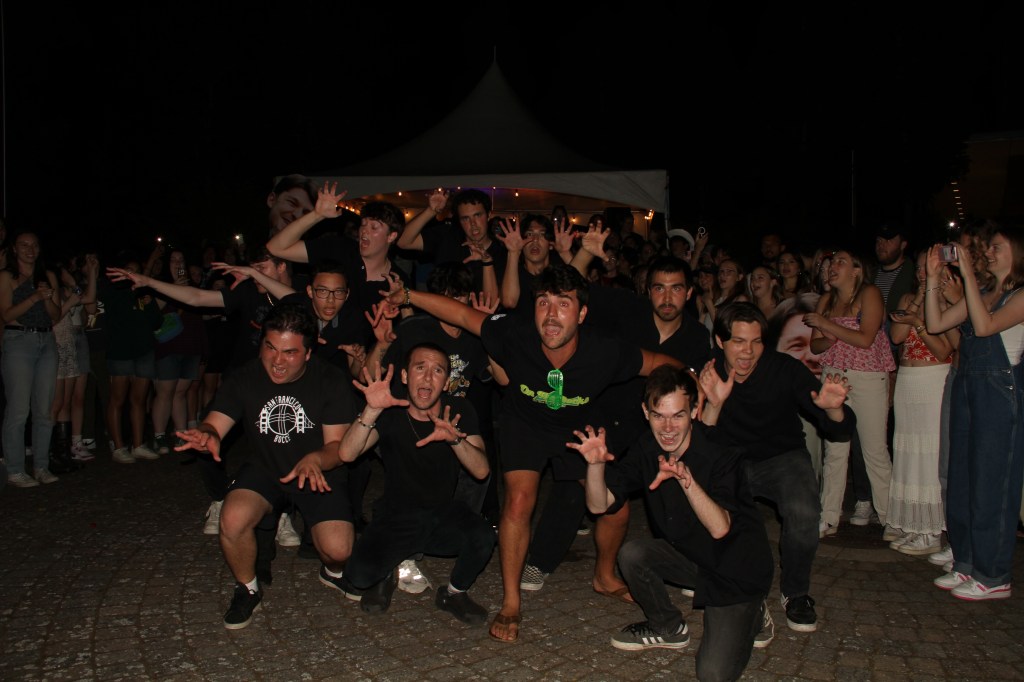
    On The Rocks photographed at one of their performances

    Their song selections are typically chosen by the group’s musical directors, with the weekly setlist being finalized based on past performances and which members are available. This dynamic process keeps things fresh and ensures the group can adapt on the fly.

    Austin also credits a cappella with improving his musical ear. “There are certain songs that are more or less a cappellable, as I call it, I can hear more parts now and have a better sense of how arrangements work.”

    Music Discovery & Genre Fluidity

    Surprisingly, a cappella also led Austin to one of his favorite new artists. “My girlfriend is in Divisi, the treble-voice group, and they sing a lot of Sammy Rae and Friends. I love her music now.”

    When it comes to genre, Austin is open-minded. “Honestly, I listen to anything,” he admitted. “But I don’t dig too deep into underground music.” Still, he name-dropped Johnny Manchild as a lesser-known artist he’d love to collaborate with, especially thanks to a friend’s recommendation.

    Austin’s Picks

    As someone who’s always exploring new music, Austin also shared a few songs that he personally recommends, tracks that span genres, moods, and artists you may not have heard before. His taste leans toward emotional, lyrically rich music with atmospheric instrumentals and a touch of indie soul.

    Here’s a list of Austin’s current go-to playlist:

    • “francesca” – Hozier
    • “Coming Home Song” – Sammy Rae
    • “Simple Song” – The Shins
    • “Romeo and Juliet” – Peter McPoland
    • “Lady by the Sea” – Stephen Sanchez
    • “Tek It” – Cafuné
    • “Lead Me On” – Nate Poshkus
    • “touch tank” – quinnie
    • “Fall in Love Alone” – Stacy Ryan

    It’s the kind of playlist that pairs perfectly with rainy afternoons, long drives, or moments when you just want to feel something real. It also reflects Austin’s wide-open approach to music—one where genre isn’t a boundary, but an invitation to explore.

    Final Notes & Expert Advice

    Reflecting on the group’s recent 25th anniversary show, Austin emphasized how lasting the impact of a cappella has been. “It’s something we poke fun at, the ‘brotherhood,’ but it’s real. We all do love each other like brothers, and the connections you make are amazing.”

    When asked what advice he’d give to someone trying to expand their music taste, he said, “Don’t turn down an artist just because you don’t like one song. Especially if it’s one of their most popular.”

    And when it comes to what makes a performance stick? “It’s always the songs that mean the most to the artist that are the most impactful.”
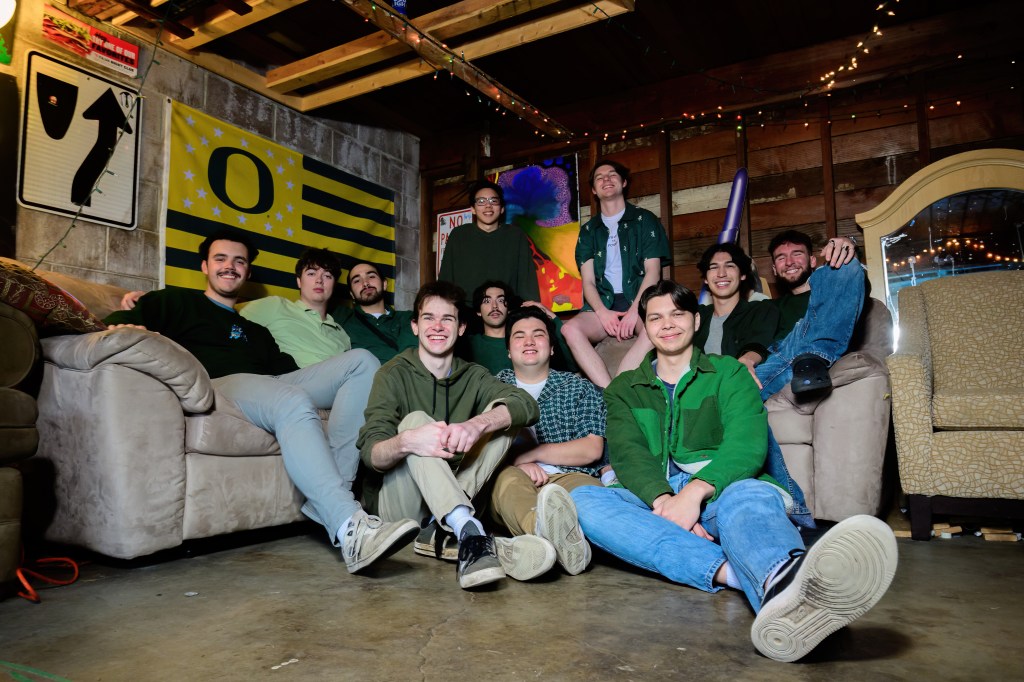
    Members of On The Rocks, an all-male acapella group at the University of Oregon, pose for a photo at their house in Eugene, Oregon.

    Closing Thoughts

    Austin’s story reminds us that music discovery isn’t just about what we listen to, it’s about how we engage with it. Whether it’s a pop anthem reimagined through human voices or finding a new favorite artist through someone else’s passion, expanding our musical world often starts with a simple choice: being open.
  • Chaos, Chords & Culture: The Heart of Pop Punk and Punk Rock

    Chaos, Chords & Culture: The Heart of Pop Punk and Punk Rock

    This week, we’re going full volume with Punk Rock and Pop Punk, genres that wear their emotions loud, fast, and unfiltered. It’s angsty, catchy, sarcastic, and surprisingly heartfelt. Whether you were blasting this in middle school or discovering it now, punk is the kind of music that refuses to stay quiet.

    What Is Punk Rock/Pop Punk, and Where Did It Come From?

    Punk rock exploded in the mid-1970s as a raw, rebellious reaction to the polished mainstream music of the time. It was anti-establishment, DIY, and intentionally loud. Pop punk followed in the late ’90s and early 2000s, fusing punk’s edge with upbeat, melodic hooks. It gave us bands like blink-182, Green Day, and Paramore, artists who turned teenage chaos into anthems.

    This genre is all about energy. Punchy drums, distorted guitars, and emotionally blunt lyrics create a sound that feels like a cathartic scream or the best kind of group sing-along.

    The Playlist:

    Standout Artists You Should Know

    Green DayGreen Day on Spotify
    A foundational force in modern punk, Green Day helped push the genre into the mainstream without losing its rebellious core. Billie Joe Armstrong’s emotionally charged vocals, combined with infectious melodies and punchy instrumentation, make their music both cathartic and catchy. Whether it’s alienation, heartbreak, or rebellion, Green Day delivers it with grit and honesty.

    Green Day – Boulevard Of Broken Dreams [Official Music Video] [4K Upgrade] via YouTube

    blink-182: blink-182 on Spotify
    Arguably the most iconic pop punk band of the early 2000s, blink-182 defined a generation of misfit energy. Known for their goofy humor, breakneck tempos, and surprisingly tender lyrics, they struck a balance between immaturity and emotional vulnerability. What’s My Age Again and All the Small Things are timeless for their carefree hooks. Their influence on youth culture, fashion, and the sound of punk-pop is undeniable.

    blink-182 – All The Small Things (Official Music Video) via YouTube

    The All-American Rejects: The All-American Rejects on Spotify
    A standout from the early 2000s emo-pop scene, The All-American Rejects brought a slightly glossier, emotionally driven sound to the punk space. Their music is filled with huge hooks, heart-on-sleeve lyrics, and just enough edge to feel rebellious. Their track, Dirty Little Secret is an anthem for anyone navigating heartbreak or self-doubt with headphones on full blast. They’re a perfect example of punk’s evolution, where emotional storytelling meets polished production without losing its punch.

    The All-American Rejects – Dirty Little Secret (Official Music Video) via YouTube

    A Few of My Favorites

    Still Into You – Paramore
    Hayley Williams’ vocals are iconic, and this track hits that perfect balance between edgy and emotionally open. It’s bright, powerful, and filled with infectious energy, a love song that still manages to feel rebellious. Even years after its release, it still sounds fresh and impossible not to sing along to.

    Basket Case – Green Day
    The ultimate punk anthem for anyone who’s ever felt overwhelmed, anxious, or just not okay. It’s fast, cathartic, and brutally honest in a way that still resonates decades later. The blend of humor and raw vulnerability captures everything punk stands for.

    Kryptonite – 3 Doors Down
    More alt-rock than punk, but the emotional grit and sharp guitars give it a place in this list. It captures vulnerability in a way that feels right at home next to angst-driven punk tracks. There’s something timeless about its moody confidence and steady drive.

    Want to Dig Deeper?

    If you’re curious about how punk rock went from underground rebellion to mainstream anthem, or the difference between pop punk and punk rock, these reads break it all down. Here’s where you can explore the genre beyond the playlist:

  • Visualizing the Vibe: How Infographics Bring Music to Life

    Visualizing the Vibe: How Infographics Bring Music to Life

    Music is more than sound, it’s emotion, identity, and culture. As someone who writes weekly about different genres, I’m always looking for ways to make music discovery more accessible and engaging. Infographics are perfect for this: they turn big ideas, industry stats, and genre breakdowns into visuals that stick.

    This week, I’m analyzing two music infographics that do just that. One highlights the emotional power of music, and the other breaks down the top music genres across the U.S. and beyond. Whether you’re a casual listener or full-on music nerd, these visuals tell meaningful stories, and offer design inspiration for my own upcoming infographic project.

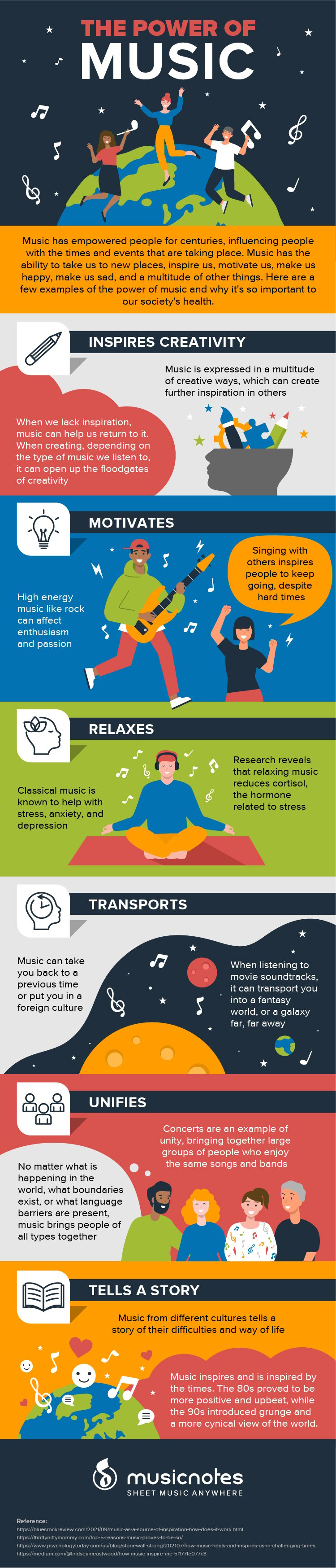
    Infographic #1: The Power of Music – Musicnotes

    📍 Link: View infographic details here

    The Power of Music

    This infographic explores six key ways music impacts our lives: it inspires creativity, motivates, relaxes, transports, unifies, and tells a story. Instead of leaning on numbers, it leans into emotion, and that’s exactly why it works.

    Why It’s Effective:

    • Visual Hierarchy & Organization:
      Each theme is sectioned clearly with bold headers, icons, and colorful illustrations. The flow is vertical and intuitive, taking the viewer through each benefit one at a time.
    • Color Choices:
      The soft palette of purples, blues, oranges, and yellows creates a welcoming, optimistic vibe. Each section has a unique color tone, helping to distinguish ideas and set the mood.
    • Typography & Readability:
      Clean sans-serif fonts and consistent sizing keep it modern and legible. Text is spaced out just enough to make reading easy without crowding the visuals.
    • Balance of Text and Visuals:
      Each point includes a short description and an expressive illustration, perfectly balanced for scrolling or printing. No walls of text, just enough info to spark thought.
    • Telling a Story with Data:
      While it doesn’t use hard stats, this infographic tells a universal story of how music connects us. It reminds us why music matters, which is the soul of my blog’s entire mission.

    What I’ll Use in My Own Infographic:

    • Icon-based visuals
    • A calming, thematic color palette
    • Short, impactful copy that pairs with visuals

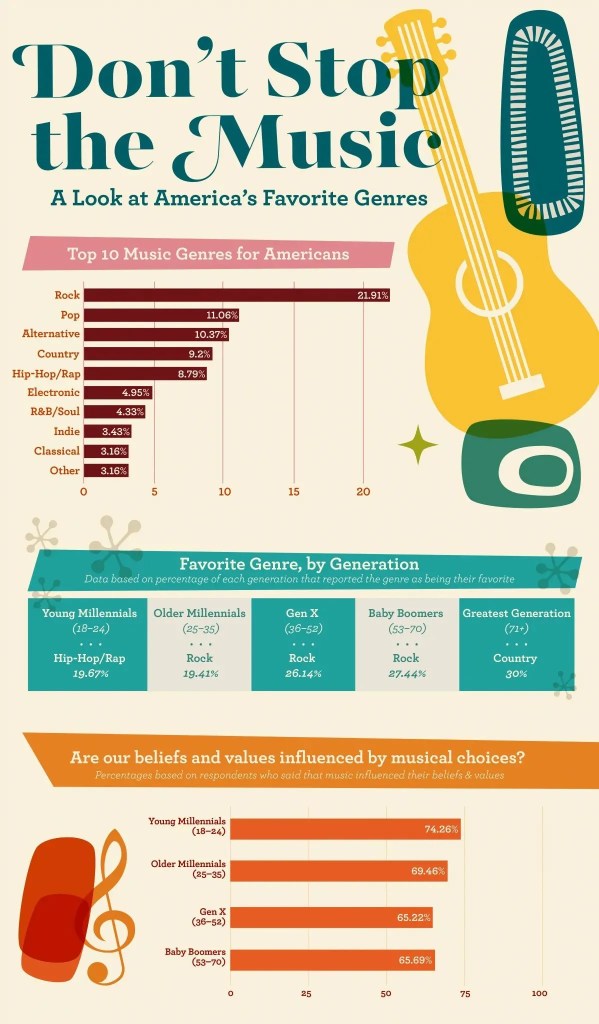
    Infographic #2: Don’t Stop the Music: A Look at America’s Favorite Genres – BeginnerGuitar.pro

    📍 Link: Explore the infographic and full article

    This infographic offers a breakdown of the top 10 most popular music genres worldwide, including genre descriptions, key instruments, notable time periods, and cultural origins.

    Why It’s Effective:

    • Visual Hierarchy & Organization:
      The infographic is divided by genre, with each one getting its own space and section. Icons, titles, and supporting text are laid out in a clean vertical flow, making it easy to follow.
    • Color Choices:
      Soft but bold colors are used to represent each genre, making it easy to distinguish reggae from rock or hip-hop from country. The colors help define mood and tone for each genre.
    • Typography & Readability:
      Genre headers are large and bold, while body text remains small but readable. The clean contrast ensures that both casual skimming and deep reading are possible.
    • Balance of Text and Visuals:
      Each genre includes a brief history and key details, paired with relevant instrument icons. There’s a perfect balance of information without overload.
    • Telling a Story with Data:
      Beyond just listing genre names, this infographic gives cultural and historical context, what made the genre popular, when it rose, what instruments define it. It helps people understand why these genres matter.

    What I’ll Use in My Own Infographic:

    • Instrument icons or visual genre markers
    • Vertical flow design that keeps it clean and scrollable

    Bonus Exploration: MusicMap – Genre Discovery for the Deep Divers

    If you’re someone who likes to know how genres are all connected, from classic blues to indie pop and deep house, MusicMap is your dream tool.This interactive map lets you trace genres through time, discover key artists, and explore obscure subgenres you didn’t know existed. I highly recommend checking it out if you’re curious about where your favorite genre came from, or what it’s connected to.

    Final Takeaways

    These two infographics serve totally different purposes, one is emotional and visual, the other is educational and structured, but both succeed in turning complex information into something clear and engaging.

    As I work on my own infographic, I plan to:

    • Use a clean, vertical layout
    • Combine emotional storytelling with genre knowledge
    • Add icons, bold headers, and light color coding

    Infographics can be a powerful bridge between knowledge and curiosity, and for a music discovery blog, they’re an ideal way to invite readers to explore genres in a new, visual way.

  • One Love, One Rhythm: Riding the Waves of Reggae

    One Love, One Rhythm: Riding the Waves of Reggae

    Some genres hit you in the head. Reggae hits you in the soul. This week, we’re tuning into the heart of island rhythm, Reggae: a genre rooted in peace, resistance, love, and community. With its warm grooves, offbeat bounce, and feel-it-in-your-bones kind of bass, reggae is more than a vibe. It’s a mindset.

    What Is Reggae, and Where Did It Begin?

    Born in Jamaica in the late 1960s, reggae evolved from ska and rocksteady, combining syncopated rhythms with deep basslines and conscious lyrics. It’s known for its laid-back tempo, skanking guitar, and rich storytelling, often tied to themes of love, spirituality, and social justice.

    Bob Marley and The Wailers helped bring reggae to the world stage, but the genre has evolved in incredible ways, from island-inspired pop to modern reggae fusion artists like J Boog, Fia, and Pana, who are keeping the spirit alive and global.

    Reggae is music that moves you, but more importantly, it grounds you.

    The Playlist:

    Standout Artists You Should Know

    Bob Marley & The WailersBob Marley & The Wailers on Spotify
    The iconic sound. Bob Marley & The Wailers influence is beyond music, they are a cultural movement. Songs like Jamming and Is This Love continue to speak to freedom, peace, and unity. They introduced reggae to the world, and their legacy remains unmatched.

    Bob Marley & The Wailers – Jamming (Official Music Video) via YouTube

    J BoogJ Boog on Spotify
    A modern reggae heavyweight with Samoan roots, J Boog brings sincerity, soul, and smoothness. Let’s Do It Again is a perfect intro to his island-meets-R&B sound. He carries forward Marley’s spirit with a modern romantic twist.

    J Boog Photo via Ineffable Music

    FiaFia on Spotify
    Fia’s music is all about inner peace, love, and connection. His vocals are buttery, and his tracks feel like a conversation with someone who gets it. If you’re new to conscious reggae fusion, Love Me is a beautiful starting point.

    Fia – Love Me (Official Music Video) via YouTube

    A Few of My Favorites

    Your Lovin’ Is Enough (feat. Likkle Jordee) – Pana
    This track just feels good. With its simple message and island tempo, it blends softness and soul perfectly. Likkle Jordee’s voice adds texture, and the song captures what reggae does best, turning heartfelt emotion into something you want to sway to under the sun.

    Is This Love – Bob Marley & The Wailers
    An all-time classic that still melts hearts decades later. Marley’s voice is gentle but powerful, and the lyrics are both poetic and universal. It’s not just a love song, it’s a soul connection, wrapped in the warmth of that signature reggae rhythm.

    It Runs Through Me (feat. De La Soul) – Tom Misch
    While not strictly reggae, this genre-blending groove brings jazzy guitar, reggae-influenced rhythm, and hip-hop into a perfect harmony. It’s a chilled-out, musically rich track that’s impossible not to vibe with. That beat? Smooth like sea breeze.

    Want to Learn More?

    “One Love: How Reggae Music Inspired The World” – U Discover Music
    This article explores reggae’s journey from Jamaica’s streets to global stages. It highlights how reggae became a powerful cultural and political force, inspiring movements around the world and influencing artists across genres. A must-read if you want to understand reggae’s lasting impact and how Bob Marley helped change music, and society, forever.

    “Reggae Music Guide: A Brief History of the Reggae Genre” – MasterClass
    A short but rich overview of reggae’s evolution, this guide breaks down its musical structure, roots in ska and rocksteady, and key artists who shaped the sound. It’s a great intro for anyone new to the genre or looking to understand what makes reggae feel so timeless.

    Reggae isn’t about perfection, it’s about presence. It’s the rhythm of resilience, the soundtrack of joy, and a reminder to breathe deep and move slow. So next time life feels loud, put on this playlist, sway to the groove, and remember, one love.

    Your Turn: Feel the Rhythm, Share the Vibe

    Music is meant to be shared, and reggae is all about connection.

    • Which track on this playlist hit you the hardest?
    • Do you have a go-to reggae song or artist that I should check out?
    • Where do you imagine yourself listening to this playlist: on a beach, a balcony, a drive at sunset?
    • How does reggae compare to other genres you’ve explored on this blog
    • Has reggae introduced you to a new culture, message, or mindset?

    Drop a comment below and tell me your favorites!

  • Silk & Static: R&B to Get Lost In

    Silk & Static: R&B to Get Lost In

    This week, we’re sinking into a genre that wraps you in emotion and doesn’t let go. R&B, short for rhythm and blues, has long been the go-to for expressing what words alone can’t. Whether it’s heartbreak, healing, desire, or devotion, R&B knows how to say it with soul.

    R&B is slow-burning honesty. It’s the late-night text you don’t send. It’s the ride home in silence with the bassline doing all the talking.

    What Is R&B, and Why Does It Still Hit So Hard?

    R&B began in the 1940s as a blend of jazz, gospel, and blues, evolving through decades into what we now know as contemporary R&B, smooth vocals, lush harmonies, and deeply felt lyrics layered over groove-heavy production. It’s a genre defined by intimacy, authenticity, and vulnerability.

    From classic voices like Aretha Franklin to genre-shapers like Lauryn Hill and modern icons like SZA, R&B has always been about saying what matters and making you feel it. It’s deeply personal but somehow universal.

    The Playlist:

    Standout Artists You Should Know

    SZA: SZA on Spotify
    SZA’s voice is weightless but powerful, and her ability to capture complex emotion in simple phrases is unmatched. She is R&B Pop perfection. Songs like Prom and Open Arms show her range, both sonically and emotionally. She’s raw, relatable, and entirely in her own lane.

    Ctrl Album Photo via Sage Adams

    Lauryn Hill: Lauryn Hill on Spotify
    A legend in every sense, Lauryn Hill crafted one of the most emotionally resonant R&B ballads ever with Ex-Factor. It’s a masterclass in vulnerability, layered, intimate, and soul-piercing. Hill’s one and only solo album, The Miseducation of Lauryn Hill, remains a cultural milestone and continues to set the emotional standard that so many modern R&B artists aspire to.

    Lauryn Hill – Ex-Factor (Official HD Video) via YouTube

    Leon Thomas: Leon Thomas on Spotify
    An artist you need to keep an eye on. Leon Thomas, a name we all remember from childhood, brings complexity to R&B with experimental beats, bold storytelling, and standout vocals. He’s not just creating music, he’s building soundscapes you get lost in.

    Leon Thomas Photo via Billboard Music

    A Few of My Favorites

    My Hair – Ariana Grande
    This track feels intimate and confident, like a whispered secret and a power move at the same time. The production is sleek, jazzy, and minimal, giving Ariana’s vocals room to float and flex. It’s such a subtle, sensual standout that showcases R&B’s more delicate side while still dripping in self-assured energy.

    MUTT – Leon Thomas
    MUTT is layered, raw, and genre-blending in all the right ways. Leon Thomas’s vocals slide over a haunting beat, mixing old-school soul with new-wave smoothness. It’s introspective without being heavy, and the production makes it feel both classic and cutting-edge.

    We Might Even Be Falling in Love (Duet) – Victoria Monét & Bryson Tiller
    This song is pure magic. It’s dreamy and flirty, like the beginning of something real but undefined. The duet feels effortless, the chemistry is there, and the production is warm like sunset light through a window. I could play this one on loop for hours.

    Want to Go Deeper?

    If this playlist has you feeling all the feels and wanting to understand R&B’s roots, legacy, and future, these reads and resources will take you there:

    R&B isn’t about doing the most; it’s about saying the most with the least. It’s softness as strength, vulnerability as power. So the next time you’re in your feelings (or pretending not to be), let this genre speak for you.

  • When Jazz Meets House: Jazzy House Essentials

    When Jazz Meets House: Jazzy House Essentials

    This week, we’re slowing things down just enough to groove. Jazzy House is where vintage soul and smoky saxophones meet smooth house rhythms and city-night energy. It’s late-night café vibes, neon reflections on wet pavement, and headphones-on-in-your-own-world music.

    Jazzy house was made for feeling deeply and rhythmically without needing too many words.

    What Is Jazzy House, and Where Did It Come From?

    Jazzy House is a subgenre of house music that fuses the warm, improvisational feel of jazz with the steady, looping structure of deep house. Think upright bass lines, brushed snares, sultry piano chords, and sax solos over four-on-the-floor beats. It emerged in the early 1990s as DJs began sampling jazz records and blending them into club tracks, creating a genre that feels both retro and futuristic.

    The vibe is smooth but alive, it’s the soundtrack to sipping espresso in a Paris café or wandering solo through nighttime streets in London. It’s cozy, refined, and unexpectedly emotional.

    The Playlist:

    Standout Artists You Should Know

    dublon: dublon on Spotify
    dublon blends classic house rhythms with subtle jazz flourishes and lo-fi textures, creating tracks that feel both elegant and deeply vibey. Whether it’s the moody bounce of Nectar or the depth of Evolution, their sound is consistently immersive.

    Image via Bandcamp

    Charlie Jeer: Charlie Jeer on Spotify
    Charlie Jeer delivers warmth and intimacy in every beat. Her Eyes is a standout, it’s delicate, heartfelt, and the kind of track that feels like a memory. His production style leans cinematic, perfect for late-night listening.

    Charlie Jeer – Her Eyes (Official Video) via YouTube

    Jazzwaves: Jazzwaves on Spotify
    Jazzwaves lives up to the name, creating flowing, atmospheric pieces that blend live instrumentation with electronic subtlety. Autumn in Amsterdam and Lost in London both feel like postcard snapshots turned into sound.

    Image via Apple Music Jazzwaves Profile

    A Few of My Favorites

    Evolution – Dublon & Deza
    This track gets it. From the first few seconds, you’re wrapped in warm textures, subtle hi-hats, and a gentle bassline that evolves without ever rushing. It feels like growth—like the sound of someone figuring themselves out in real time. I love the balance of calm and movement.

    nyc in 1940 – berlioz & Ted Jasper
    This one’s a whole mood. It samples jazzy horns that sound like they’re echoing off old brick buildings, while the beat keeps you grounded. It feels like time travel, nostalgic but super current. It’s the kind of song that makes your commute cinematic.

    Lost in London – Jazzwaves
    The title says it all. This track captures that beautiful kind of solitude, where you’re alone, but in the best way. The chord progressions are soulful and a little melancholy, and I always feel more centered after listening.

    Want to Dig Deeper?

    Want to learn more about the history of jazz and house music? These links break down both genres separately and their cultural background:

    Jazzy House isn’t loud or flashy, but it moves. It’s the perfect genre for winding down, zoning in, or getting lost in the rhythm of your own thoughts. So hit play, breathe deep, and let the groove guide you.

  • Live Nation’s Green Nation: Leading the Charge in Sustainable Live Music

    Live Nation’s Green Nation: Leading the Charge in Sustainable Live Music

    As the world’s largest live entertainment company, Live Nation has a significant environmental footprint. Recognizing this, the company launched the Green Nation initiative in 2019, aiming to make live events more sustainable and environmentally friendly.​

    The Birth of Green Nation

    Live Nation’s Green Nation initiative was introduced to address the environmental challenges associated with live events. The program’s primary goals include:​

    • Reducing greenhouse gas emissions by 50% by 2030.
    • Eliminating single-use plastics from all owned and operated venues and festivals.
    • Achieving zero waste to landfill across offices, venues, and events by 2030.​

    These targets align with global efforts to combat climate change and reflect Live Nation’s commitment to sustainability.​ Live Nation’s Vision for Sustainable Events

    Communication Strategies: Engaging Stakeholders

    Live Nation has employed a multi-faceted communication approach to promote Green Nation:​ At Home with Green Nation

    • Public Commitments: The company publicly announced its sustainability goals, reinforcing transparency and accountability.​
    • Collaborations: Partnering with artists and festivals to implement sustainable practices, thereby leveraging their influence to reach broader audiences.​
    • Educational Content: Publishing blog posts and resources, such as “Celebrating Earth Day & Sustainable Events,” to inform and inspire stakeholders about sustainable event practices.​
    • Visual Branding: Utilizing the Green Nation logo across platforms to create a recognizable symbol of their sustainability efforts.​

    Effectiveness: Measuring Impact

    Live Nation’s communication strategies have effectively raised awareness and driven action:​

    • Industry Influence: The initiative has set a benchmark in the live entertainment industry, encouraging other companies to adopt similar sustainability goals.
    • Stakeholder Engagement: By involving artists, fans, and employees, Live Nation has fostered a community committed to environmental responsibility. ​Live Nation Special Events
    • Transparency: Regular updates and reports on progress have built trust and demonstrated the company’s dedication to its commitments.​

    Alignment with Brand and Values

    Live Nation’s core mission is to connect people through live music experiences. By integrating sustainability into this mission, the company ensures that future generations can continue to enjoy live events without compromising the planet’s health. The Green Nation initiative embodies Live Nation’s values of innovation, responsibility, and community engagement.​

    Coming to a Close

    Live Nation’s Green Nation initiative exemplifies how companies in the music industry can lead in corporate social responsibility. Through clear goals, strategic communication, and alignment with core values, Live Nation is setting a precedent for sustainable practices in live entertainment. As the company continues to innovate, it serves as a model for how the music industry can harmonize business success with environmental stewardship.

  • The Dreamy Pulse of Indie Alternative Sound

    The Dreamy Pulse of Indie Alternative Sound

    There’s something special about indie alternative music, it doesn’t just play in the background; it feels like a soundtrack to your thoughts. Whether you’re taking a walk alone, road-tripping with friends, or just lying on your bed staring at the ceiling, this genre knows how to meet you exactly where you are.

    This week, we’re stepping into the vibrant, genre-bending world of indie alternative! A sound that’s part daydream, part rebellion, and entirely its own thing.

    What Is Indie Alternative, and Where Did It Come From?

    “Indie alternative” originally described as music made by independent artists outside the major label system, but it quickly grew into a full-on genre defined by creativity, honesty, and experimentation. It blends elements of rock, pop, electronic, and even funk or psychedelia, often with a DIY approach and deeply personal lyrics.

    What makes indie alt music so compelling is its diversity. It can be bright and upbeat, moody and reflective, or totally weird in the best way. The music invites you to feel something, even if you’re not sure what it is yet.

    The Playlist:

    Standout Artists You Should Know

    Tame Impala: Tame Impala on Spotify

    The brainchild of Kevin Parker, Tame Impala redefined modern psychedelic alt music. With dreamy vocals, hazy synths, and deeply emotional themes, tracks like Eventually and Borderline blend introspection with groove in a way few artists do.

    Tame Impala – Borderline (Official Audio) via Youtube

    MGMT: MGMT on Spotify

    Known for pushing boundaries, MGMT brought psychedelic weirdness to the mainstream with Kids and Electric Feel. Their music feels like a surreal daydream you never want to leave.

    MGMT – Kids (Official HD Video) via YouTube

    Phoenix: Phoenix on Spotify

    The band brought their French indie pop with a crisp, colorful sound to the world. 1901 is probably their most iconic track, and its danceable energy makes it a perfect gateway into the indie alternative sound.

    Phoenix – 1901 (Official Video) via YouTube

    A Few of My Favorites

    Eventually – Tame Impala
    Tame Impala knows how to make you feel like you’re floating through a feeling, and Eventually is no exception. It’s spacey, emotional, and layered with psychedelic textures. The song captures that hard-to-describe moment when you know letting go is the right move, even if it hurts. I love how it builds so subtly, like an emotional wave slowly crashing.

    Alive – Empire of the Sun
    This song lives up to its name, it feels alive. There’s something cinematic and euphoric about the way it opens with sparkling synths and builds into this glowing anthem. The lyrics are simple but powerful, and that chorus just explodes with energy. Whenever I listen to it, it instantly lifts my mood. It’s like indie pop meets sci-fi soundtrack, and I’m obsessed.

    A-Punk – Vampire Weekend
    This song is pure indie joy. The jangly guitar, the fast tempo, the quirky vocals, it’s all so infectious. It reminds me of summer, riding bikes, and feeling young and chaotic in the best way. It’s short and punchy but leaves a lasting impression.

    Want to Dig Deeper?

    If you’re curious about the rise of indie alternative and how it’s evolved in the streaming age, check out these articles I found:

    Indie alternative is music that makes you feel seen. It doesn’t try too hard, it just is. And that’s kind of the whole point. So the next time you need a soundtrack for your spiral or a boost for your solo stroll, press play and let the indie alt waves carry you.

  • Women in Music: A Standout Non-profit

    Women in Music: A Standout Non-profit

    When I started this blog, my main goal was to help people discover new sounds, artists, and communities in the world of music. This week, I want to take a step back from the music itself and focus on an organization that’s doing incredible work behind the scenes: Women In Music.

    Founded in 1985, Women In Music (WIM) is a nonprofit that’s all about advancing the awareness, equality, diversity, heritage, and opportunities for women in the musical arts. Their mission isn’t just about representation – it’s about creating a world where women across all areas of the industry are supported, celebrated, and given the tools to thrive.

    What They Do
    WIM offers a wide range of core services, from educational workshops and mentorship programs to networking events and panels with top industry professionals. Whether you’re an emerging singer-songwriter, a behind-the-scenes producer, or even just a fan thinking about a career in music business, WIM creates spaces for learning, collaboration, and growth. They currently have chapters all over the world, connecting women in music at every stage of their career.

    Meeting the Need
    The music industry has historically been male-dominated, especially in roles like production, engineering, and leadership. WIM steps in to fill that gap by providing access to resources that many women might otherwise not have. Their mentorship programs are especially powerful – pairing newcomers with experienced professionals who can help guide them through the industry’s ups and downs.

    They also host panels and webinars addressing real-world issues like gender bias, negotiation strategies, mental health, and career development. It’s not just about getting women into the industry; it’s about helping them succeed once they’re there.

    Are They Effective?
    Absolutely. One thing that really stands out about WIM is how consistently they stay engaged with their community, both online and in-person. Their programming isn’t just theoretical – it’s actionable. Plus, the success stories coming out of WIM’s mentorship and educational events show real impact: more women landing leadership positions, producing records, and creating lasting change.

    Their website (check it out here) is packed with resources, and their social media presence is lively and inspiring. You can tell they care about building a strong, ongoing conversation about equality in music.

    Final Thoughts
    Organizations like Women In Music are so important because they actively reshape what the future of music looks like. By giving women the tools to lead, innovate, and inspire, WIM is helping to create a more vibrant, inclusive industry for everyone. Whether you’re an artist, a fan, or just someone who loves seeing positive change, they’re absolutely worth following and supporting.

    Image generated by ChatGBT

  • The Glittery Groove of Disco

    The Glittery Groove of Disco

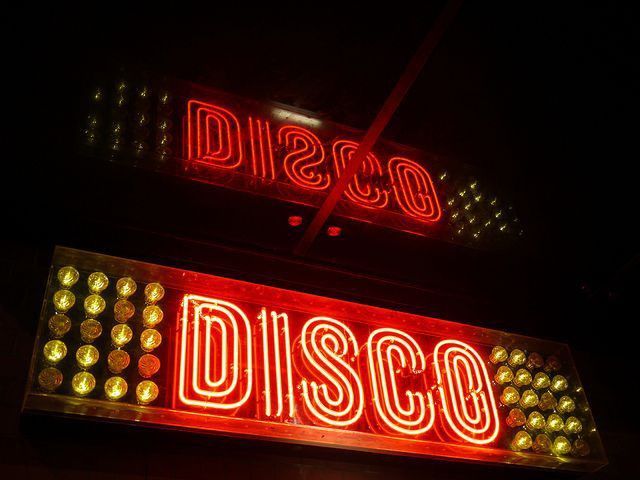
    Before TikTok trends and algorithm-curated playlists, flashing lights, spinning disco balls, and dance floors packed wall-to-wall with energy. This week, we’re diving into a genre that defined a cultural era and still makes people move: Disco 🕺✨🎶

    What Is Disco, and Where Did It Come From?

    Disco emerged in the early 1970s in underground clubs of New York and Philadelphia, pioneered by Black, Latinx, and LGBTQ+ communities. Born from soul, funk, and early electronic music, disco was more than a sound, it was a statement. It celebrated freedom, identity, and joy in a time of political unrest and cultural change.

    The genre hit its peak in the late ‘70s with the rise of discotheques and artists like Donna Summer, the Bee Gees, and Chic. While it was later dismissed by some as commercial or cheesy, disco never truly died. It laid the foundation for house music, pop, and the beats that dominate clubs today.

    Disco feels like movement, it’s basslines you can strut to, strings that shimmer, and vocals that overflow with emotion. Listening to it is like walking into a club where everyone is welcome, and the only rule is to dance.

    The Playlist:

    Standout Artists You Should Know

    Chic: Chic on Spotify

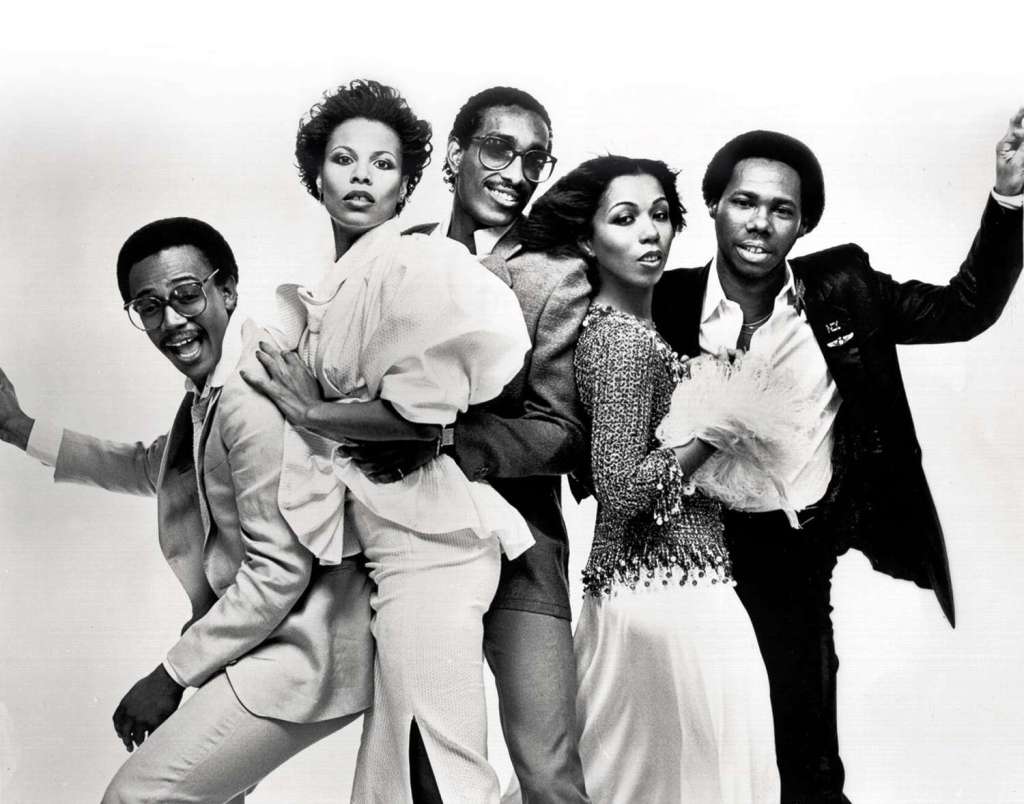
    Founded by Nile Rodgers and Bernard Edwards, Chic defined the disco era with tracks like Le Freak and Good Times, the latter of which inspired countless hip-hop and dance tracks. Rodgers would go on to produce for artists like Madonna and Daft Punk, continuing disco’s legacy into the future.

    Chic via Getty Images

    Sylvester: Sylvester on Spotify

    A queer icon and vocal powerhouse, Sylvester brought gospel intensity and flamboyant flair to disco. You Make Me Feel (Mighty Real) is not just a dance anthem; it’s a cry for authenticity and freedom on the dance floor.

    Sylvester – You Make Me Feel (Mighty Real) via YouTube

    The Bee Gees: The Bee Gees on Spotify

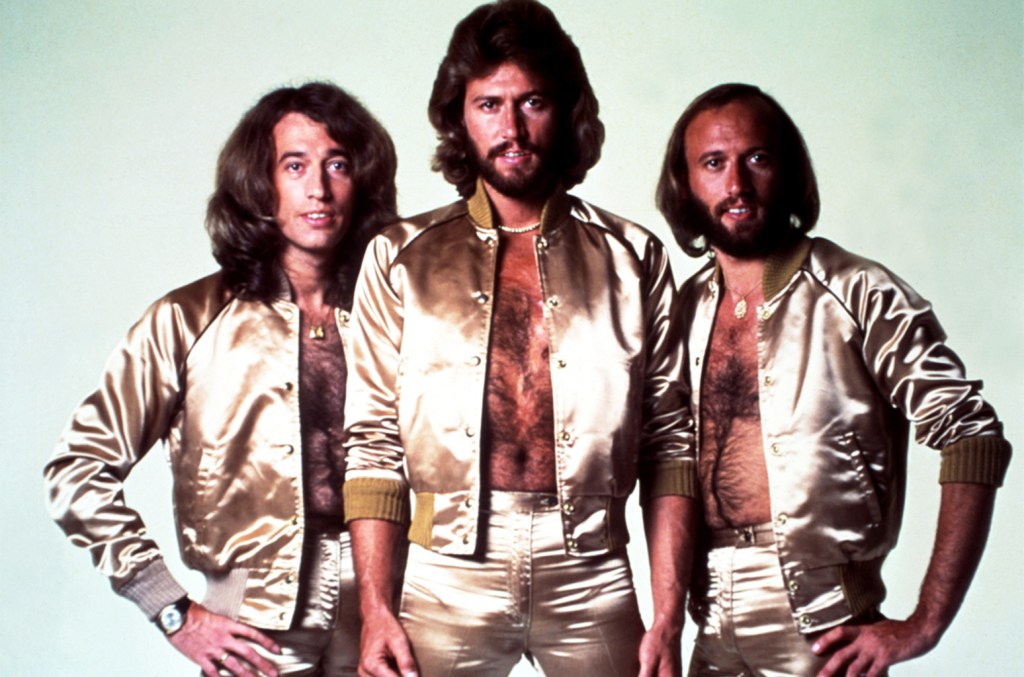
    Known for their high harmonies and unforgettable grooves, the Bee Gees’ soundtrack for Saturday Night Fever practically soundtracked the entire disco era. Night Fever is a timeless classic that still hits today.

    The Bee Gees image via IMDb

    A Few of My Favorites

    Out of all the groovy hits on this week’s playlist, a few tracks have earned a permanent spot in my rotation:

    Shake Your Body (Down to the Ground) – The Jacksons
    This track is electric. From the moment that bouncy synth line kicks in, it’s impossible not to move. The layered percussion, infectious bassline, and tight vocal harmonies make this feel like the soundtrack to a perfect summer night. It’s got that unstoppable energy that turns a regular moment into a dance break.

    Boogie Oogie Oogie – A Taste of Honey
    This one hits different. The groove is so smooth it’s hypnotic, those opening bass riffs? Iconic. What I love about this song is how laid-back it is, while still totally slapping. The vocals are buttery, the rhythm section is crisp, and it’s just effortlessly cool. It’s disco, but with a funk edge that feels like a hidden gem every time it plays.

    Shame – Evelyn “Champagne” King
    This song is pure magic. It blends heartbreak and danceability in such a unique way, King’s vocals are soulful and confident, even when she’s singing about vulnerability. And the beat? Unstoppable. There’s something cathartic about dancing through your feelings, and Shame is the perfect song for that.

    Want to Dig Deeper?

    Disco’s history is more than just the music; it’s about the communities that built it and the backlash it faced. To learn more about the genre’s cultural significance and legacy, check out these articles I found:

    Disco isn’t just retro, it’s revolutionary. It was born from resistance, joy, and the need to move. And it still pulses through today’s music in ways you might not even realize. So go ahead, turn up the volume, roll down your windows, and give in to the glitter.